Is Your Garage Door Opener Too Loud? Why Replacing an Older Unit Makes Such a Difference
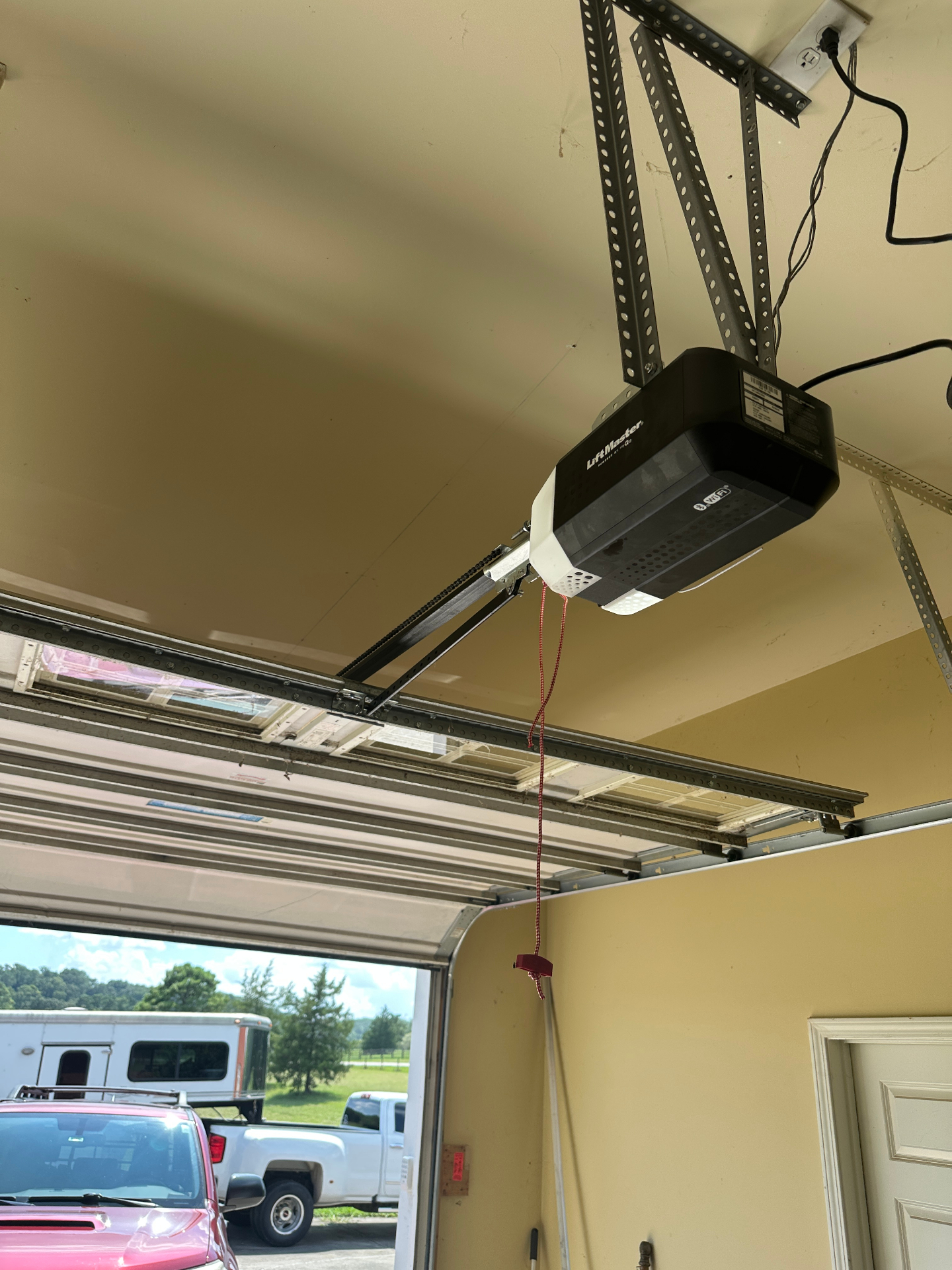
If your garage door sounds like it is announcing itself to the entire house every time it opens, you are not imagining it. Older garage door openers are genuinely louder than current models — and for homes with a bedroom or living space above the garage, that difference is felt every single day.
Here is what actually causes the noise, and why a replacement quiets things down so noticeably.
Why Older Openers Are So Loud
Most openers installed fifteen or more years ago share two design features that generate noise.
The chain drive. Older units use a metal chain running along the rail to move the door. Metal on metal produces vibration and a distinct rattling sound throughout the entire travel of the door. As the chain stretches with age, it gets louder.
The AC motor. Older openers use AC motors that start and stop abruptly. There is no gradual ramp up or ramp down — the motor goes from zero to full speed instantly, which produces a jolt at the beginning and end of every cycle. That jolt sends vibration through the rail, into the ceiling framing, and directly into whatever room sits above.
Combine the two and you get the sound most homeowners describe as the garage door "shaking the house."
What Changed in Modern Openers
Two upgrades account for most of the improvement.
Belt drive systems replace the metal chain with a reinforced rubber belt. The belt does the same work with a fraction of the mechanical noise — no metal chain slapping against the rail, no rattle that worsens over time.
DC motors with soft start and soft stop accelerate the door gradually and slow it down before it reaches the end of travel. Instead of a jolt at each end, the movement is smooth. This eliminates most of the vibration that transfers into the structure of the home.
Together, these changes make a noticeable difference in perceived sound — not a marginal improvement, but the kind homeowners comment on the same day.
Who Benefits Most From the Upgrade
The quieter operation matters most in a few specific situations.
- Homes with an attached garage, where the door shares a wall with living space.
- Homes with a bedroom, home office, or nursery directly above the garage.
- Households with early risers or people working night shifts who need to come and go without waking anyone.
- Homes where a family member is a light sleeper — this is one of the more common reasons we get called out for an opener replacement.
If your garage is detached and sits well away from the house, the noise reduction is a smaller consideration and you may simply want to replace the opener when it fails.
One Important Caveat
Not all garage door noise comes from the opener. Worn rollers, dry hinges, loose hardware, and misaligned tracks all produce their own sounds — and replacing the opener will not fix any of them.
This is worth knowing before you spend money on a new unit. A grinding or scraping sound usually points to rollers or tracks rather than the opener. A rattle at the panels is typically loose hardware. A good technician should identify the actual source before recommending a replacement, and in some cases a tune up and roller replacement resolves the noise at a fraction of the cost.
What a Replacement Involves
A standard opener replacement is typically completed in a single visit. The technician removes the old unit, mounts the new opener, connects it to the door, sets the open and close travel limits, and tests the auto-reverse safety sensors to confirm the door reverses on contact.
Most homeowners also take the opportunity to connect a smart opener to their phone, which allows remote operation and alerts if the door is left open.
Schedule a Free Inspection with Top Dog Garage Doors
Top Dog Garage Doors installs and replaces garage door openers for homeowners throughout Atlanta including Marietta, Brookhaven, Buckhead, Sandy Springs, Dunwoody, and Decatur. Our technicians are licensed, insured, and background-checked.
If your garage door has gotten louder over the years, contact us for a free inspection. We will identify what is actually causing the noise before recommending anything.